

seron
Moderator
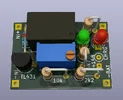
The circuit described here measures 3x2 cm and was developed for Nickel-Metal Hydride and Nickel-Cadmium battery packs, as well as 12V lead-acid batteries used in UPS systems. The circuit design is very simple and basic, utilizing only a relay and a TL431.
Although the popularity of nickel-based batteries has waned, they are still used in certain devices and power tools. Furthermore, a compact automatic cutoff circuit for charging the battery used in your laboratory is certainly useful.
The PCB is only about the size of a coin, and you can enclose it in heat-shrink tubing.The red LED will light up while the battery is charging, and the green LED will light up when it is fully charged.
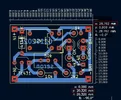
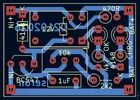
I have designed two separate circuits for you. One uses a TL431 shunt regulator circuit as the cutoff sensor, while the other employs a BC457 transistor. Both components are very easy to source. However, the relay is a crucial factor here; it is so small that it occupies very little space on the PCB, making it possible for the circuit to be coin-sized.
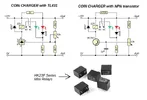
The circuit diagrams are also extremely simple and are virtually identical to the simple charge-cutoff circuits frequently encountered online. Pay attention to the relay type and series.
I generated a PDF output using KiCAD for acid-based copper etching of the circuit. You can download it from the attachments.
Although the popularity of nickel-based batteries has waned, they are still used in certain devices and power tools. Furthermore, a compact automatic cutoff circuit for charging the battery used in your laboratory is certainly useful.
The PCB is only about the size of a coin, and you can enclose it in heat-shrink tubing.The red LED will light up while the battery is charging, and the green LED will light up when it is fully charged.
I have designed two separate circuits for you. One uses a TL431 shunt regulator circuit as the cutoff sensor, while the other employs a BC457 transistor. Both components are very easy to source. However, the relay is a crucial factor here; it is so small that it occupies very little space on the PCB, making it possible for the circuit to be coin-sized.
The circuit diagrams are also extremely simple and are virtually identical to the simple charge-cutoff circuits frequently encountered online. Pay attention to the relay type and series.
I generated a PDF output using KiCAD for acid-based copper etching of the circuit. You can download it from the attachments.

